
Forest Farming Understory Crop

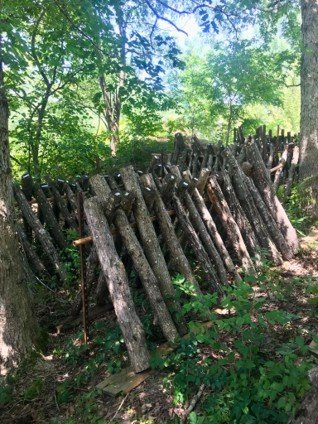
Shiitake (Lentinula edodes) naturally grows on dead or dying hardwoods in shaded conditions. In a forest farming system, landowners inoculate hardwood logs or stumps and stack them in a cool, moist laying yard under canopy. Outdoor log systems are lower-tech than indoor bag systems, and they can be more labor intensive, requiring regular handling, watering, and harvest attention. However, log-grown mushrooms are typically higher quality and often bring premium prices because of their flavor and texture.

At a glance
Shiitake can work well on properties with shaded hardwoods, dependable moisture, and a landowner willing to manage logs by hand.
Log-grown shiitake are slower than annual crops. Expect about 8-18 months from inoculation to first fruiting, but productive logs can keep fruiting for 3-6 years.
Best fit is as a diversified side enterprise with direct or local sales. Fresh mushrooms usually drive revenue; dried mushrooms, bolts, and spent logs can add value.
Select a topic below to learn about starting and scaling a shiitake enterprise on your land:
Shiitake🍄🟫
Decision Factors
Growing shiitake creates the most value when integrated with existing woodland management, utilizing culled hardwoods from routine thinning or firewood cutting. Start small to test your microclimate and labor capacity before scaling up.
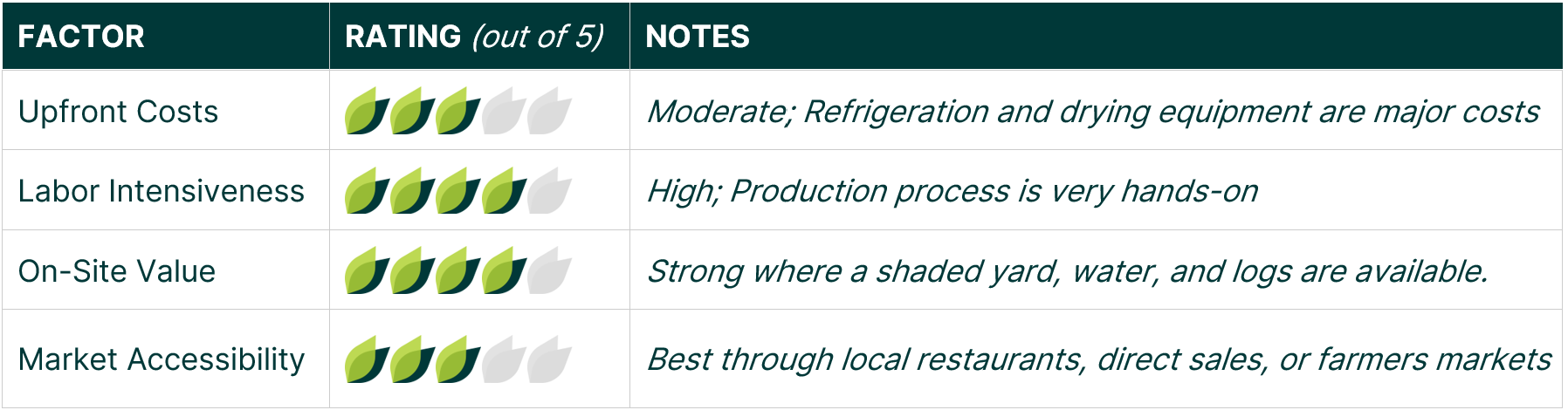
Are my woods a good fit?
Good fit if:
75-100% shade in a cool, protected laying yard
Hot, dry, exposed sites or sparse canopy
North- or east-facing slopes, ravines, or humid low spots
South-facing slopes with sustained summer heat >85°F
Hardwood logs available from thinning or nearby
Conifer substrate, aromatic wood, or damaged bark
Easy access to water and vehicle access for moving logs
Caution if:
No nearby water, rough access, or wind exposure

Scenario
You have shaded hardwood woods, water, and easy access
You want a diversified side enterprise with local/direct sales
You want passive income with minimal handling
Your site is hot, dry, open, or you have no likely buyer outlet
LIKELY YES
LIKELY YES
PROBABLY NOT
PROBABLY NOT
That is the clearest site-level fit for outdoor log-grown shiitake.
Shiitake can fit small-acreage income better than many bulk forest products.
Production, watering, harvest, and marketing are all hands-on.
Heat stress and perishability both raise failure risk.
Shiitake?
Why
Shiitake Production
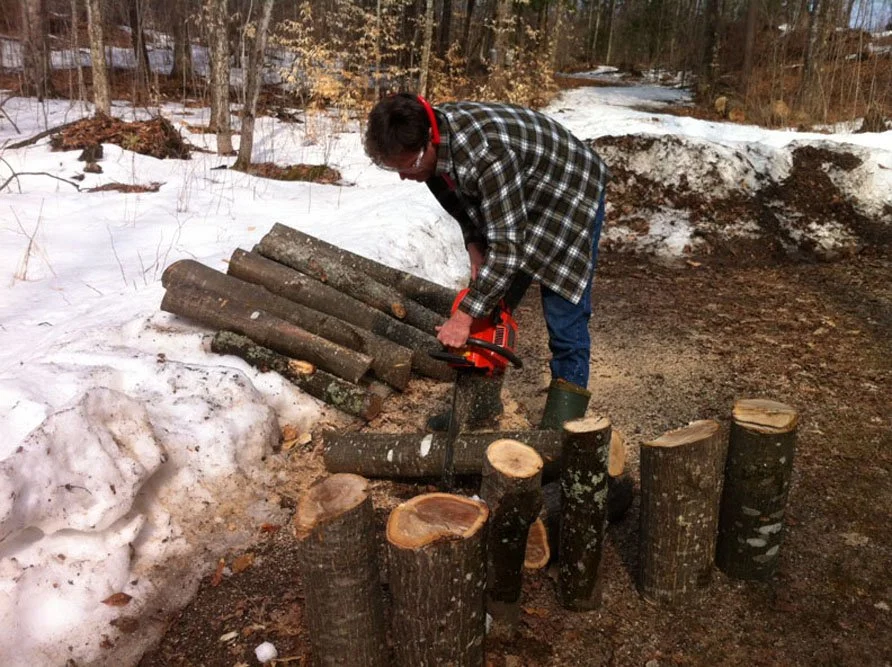
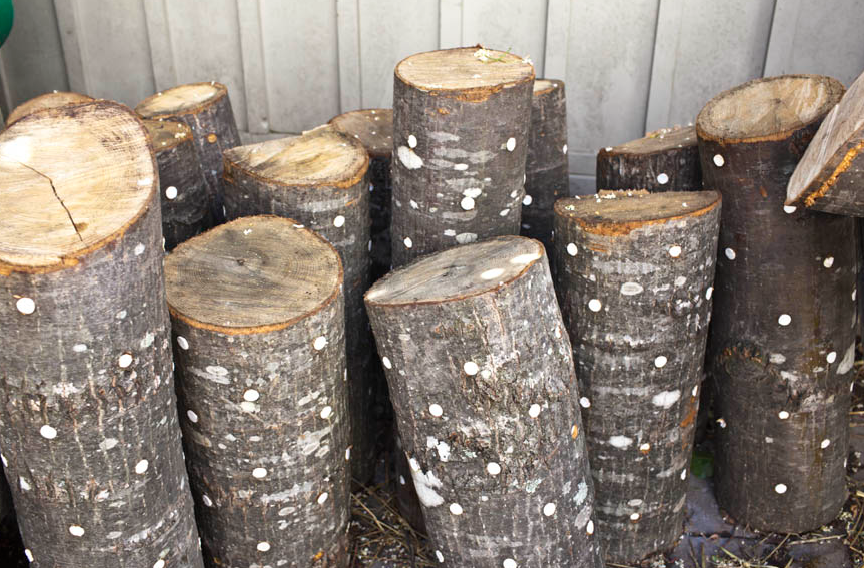
Fell hardwoods in the dormant season. Ideal logs are about 2.5-7 in. thick and 1-4 ft long, with intact bark.
CUT LOGS
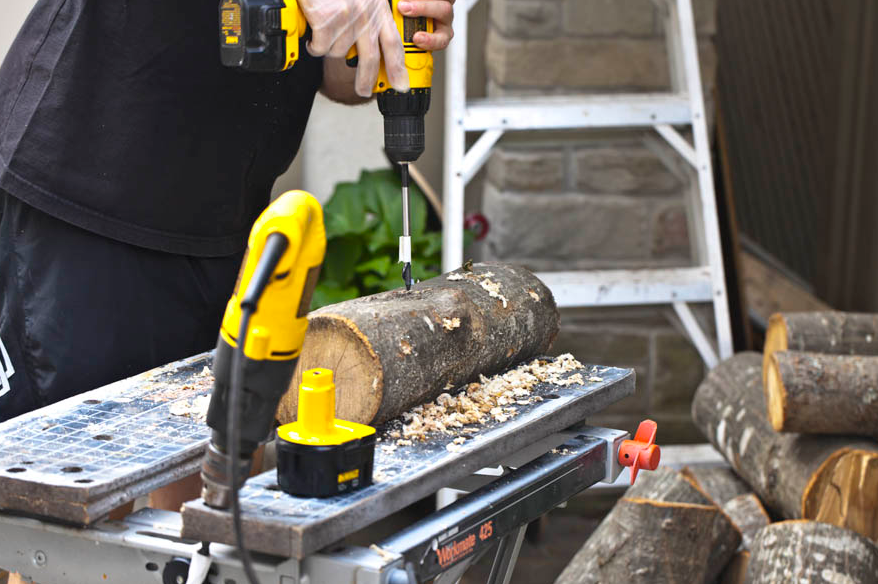
Within 1-21 days, drill holes, add plug or sawdust spawn, and seal with wax.
INOCULATE
Stack logs in shade, keep them moist, and separate out logs overtaken by competing fungi.
INCUBATE
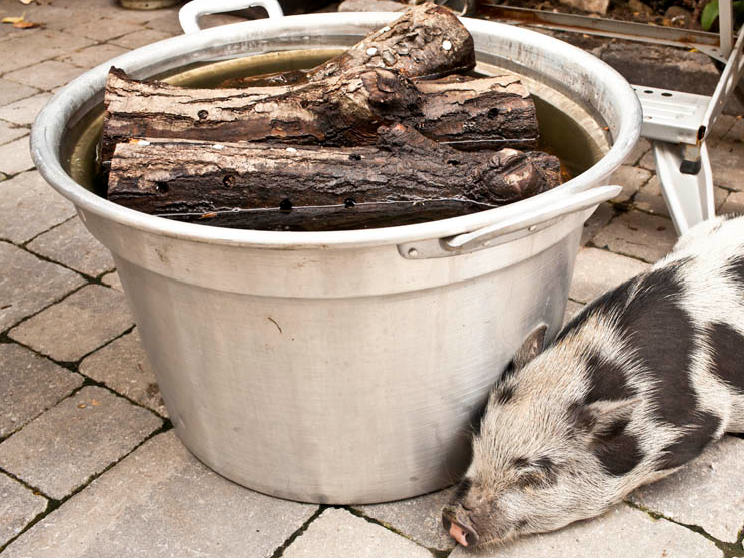
After 12-16 months, warm-season strains can be soaked for 24 hours to trigger fruiting; rest logs about 7 weeks between forcings.
FORCE/FRUIT
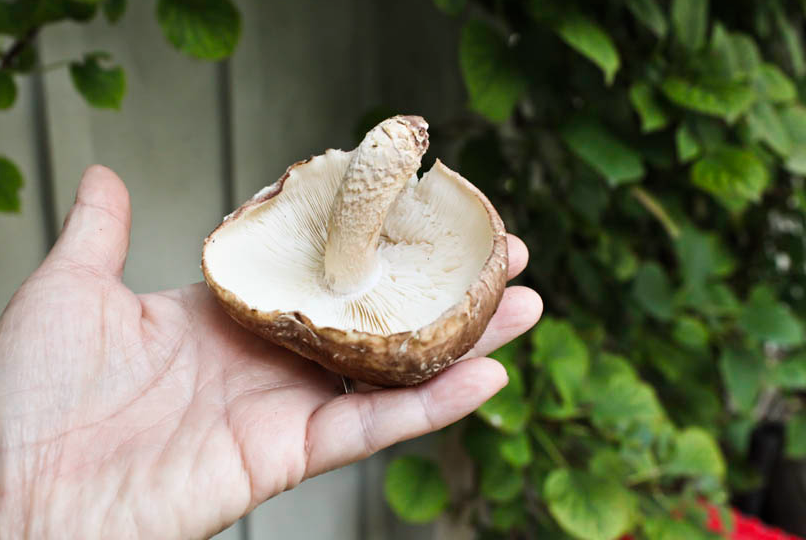
Pick when caps are just opening and chill within about 1 hour. Drying is optional for shelf life.
HARVEST
Shiitake Economics
To help you make the best financial decisions for your land, we have provided an interactive Shiitake Economic Model that allows you to plug in your own specific information to create a customized financial forecast.
Before you cut your first log, use this downloadable model below to ensure your shiitake enterprise is financially sustainable and the right fit for your land.
Market Directory
Navigating a new forestry enterprise naturally brings up specific questions as your project grows. To support you beyond our core curriculum, we have curated a comprehensive Resource Directory featuring trusted external guides and partner organizations. Whether you need deep-dives into enterprise budgeting, step-by-step implementation manuals, current market data, or connections to broader landowner networks, explore the links below to find the specialized knowledge and community support necessary to help your operation thrive.
| Resource Type | Name | Summary |
|---|---|---|
| Budget | University of Kentucky College of Agriculture: Kentucky Shiitake Production Workbook | An enterprise budget for a 500-log shiitake operation with information on best production practices as well. |
| Budget | Cornell Small Farms: Economic Report for Log-Grown Shiitake Mushrooms (2019) | A detailed report covering costs, yields, and market potential of outdoor log-cultivated shiitake production. |
| Budget | Cornell Small Farms Program: Specialty Mushrooms: Outdoor Production | An online resource with cultivation methods for growing specialty mushrooms on logs, stumps, woodchips, and beds outdoors. |
| Budget | Cornell Small Farms Program: Buying and Selling Logs for Mushroom Production | An online resource with information on sourcing, handling, and pricing bolts for mushroom production. |
| Budget | Cornell Small Farms Program: Shiitake Mushrooms Turning a Profit for Forest Farmers in the Northeast | A detailed resource providing profit breakdown and market channels for New England shiitake growers in specific. |
| Implementation | Cornell Small Farms Program: Forcing Bolts | An online resource detailing specific steps in the process of forcing bolts and initiating fruiting. |
| Implementation | The Forest Farmacy In-Person Classes | A farm offering in-person mushroom growing classes and trainings for a small fee. |
| Implementation | Cornell University: Best Management Practices for Log-Based Shiitake Cultivation in the Northeastern U.S. | A comprehensive guide on log-grown shiitake production, harvest, preservation, marketing, and more. |
| Implementation | Penn State: Cultivation of Shiitake on Natural and Synthetic Logs | An overview of traditional and modern shiitake mushroom production methods on both natural hardwood logs and synthetic substrates. |
| Market | Cornell Small Farms Program: Marketing Forest-Grown Shiitake | An online resource with advice for marketing forest-grown shiitake in New York. |
| Market | Cornell Small Farms Program: Harvest to Market Guide | A detailed resource covering shiitake enterprise cash flow, budgeting, and record keeping. |
| Network | Cornell Small Farms Program's Temperate Forest Mushroom Growers Network | A subgroup of the Cornell Small Farms Program that seeks to elevate and support mushroom growers in the Northeast. Activities include providing forest stewards with resources, trainings, and technical assistance. |